

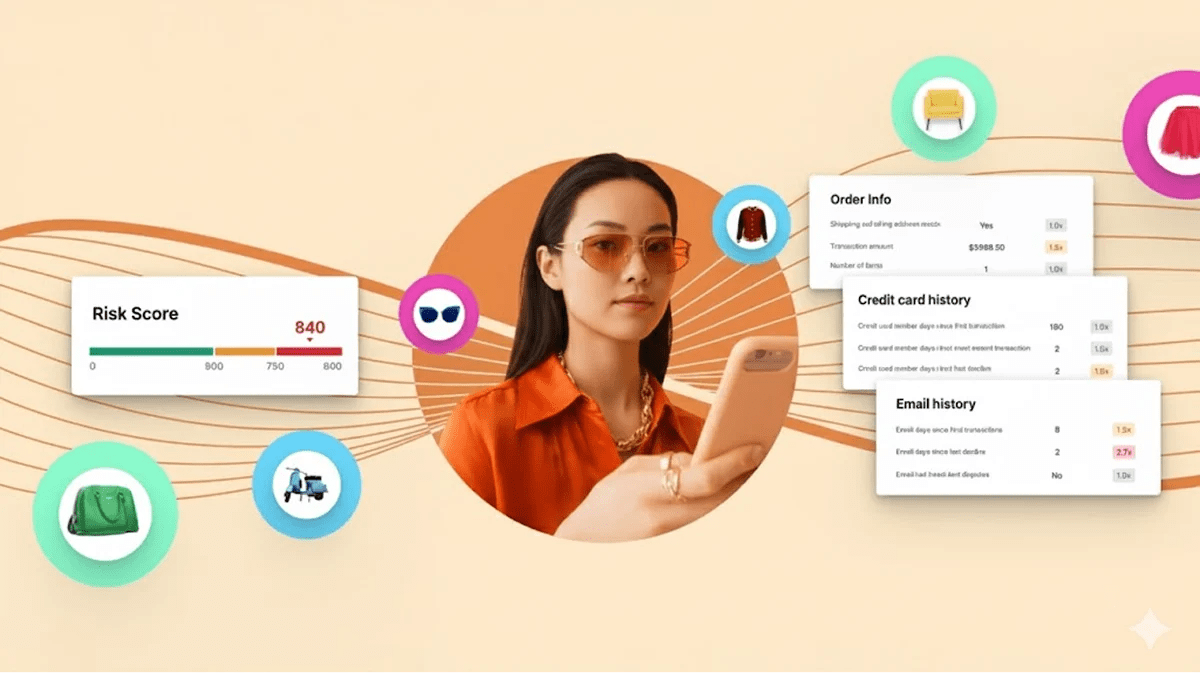


Short answer: To reduce chargebacks and fraud without hurting conversion, stop using declines as your main fraud tool. Measure approval rate and chargeback rate together, recognize returning shoppers so good orders are easy to approve, stop disputes before they become chargebacks, and move the fraud loss on approved orders to a chargeback guarantee. Each step cuts chargebacks without turning away good customers.
Why stricter rules backfire
Declining an order is the simplest way to avoid a fraud chargeback, and the surest way to lose that sale. A rule that blocks a fraudulent order can also block good orders that look like it. Chargebacks show up in your reports; declined good customers usually don't. That's why fraud and conversion belong in one report.
1. Measure approvals and chargebacks together
Track these every week, side by side:
- Approval rate: approved orders divided by attempted orders.
- Declines and manual reviews: how many orders you decline or hold, and how long reviews take.
- Chargeback rate by reason code: fraud and non-fraud, counted separately.
- Cost per chargeback: the amount lost plus your processor's chargeback fee.
Split each one by new versus returning shoppers and by device. A change that lowers chargebacks but also lowers approvals for new mobile shoppers is a trade, not a win.
2. Sort chargebacks by cause
Different causes need different fixes:
- Fraud (the card was used without the cardholder's permission): better screening and a chargeback guarantee.
- Service disputes (item not received, not as described): tracking, delivery confirmation, clear product pages and easy returns.
- "I don't recognize this charge": a billing descriptor that matches your store name, and an order confirmation email the shopper can find.
Tightening fraud rules does nothing for service disputes, and it costs you good orders.
3. Recognize good shoppers before you screen them
A shopper you can recognize is easier to approve with confidence. Accelerated checkout recognizes shoppers from an account they already have, so more orders arrive with history attached. Bolt recognizes shoppers by email plus a one-time code, across a one-click checkout network of over 100 million shoppers, on their first visit to your store. Bolt account holders convert 50% better than guest shoppers (Bolt internal data).
4. Screen with more data, not more friction
Your own order history only shows what happened on your store. Screening with signals from a wider network gives you more to go on for a first-time shopper. Bolt screens orders with signals from its overall network of 140 million shoppers. Save extra verification steps for the small share of orders that need them, instead of adding them for everyone.
5. Stop disputes before they become chargebacks
Card-network tools can catch a dispute early:
- Verifi Rapid Dispute Resolution (a Visa solution) decides Visa pre-disputes automatically under rules you set. Verifi says pre-disputes resolved with a cardholder credit don't count against Visa's dispute ratio [V1].
- Ethoca Alerts (Ethoca by Mastercard) give you near real-time fraud and dispute details, so you can act before a dispute escalates [E1].
A quick refund on a disputed order can cost less than the chargeback fee plus the time to contest it.
6. Move the fraud loss off approved orders
With a chargeback guarantee, the provider pays when an order it approved charges back as fraud. That lets you approve a good order that looks unusual without carrying the fraud loss yourself. With Total Fraud Protection, Bolt covers 100% of fraud chargebacks on approved orders*. Compare providers in our guide to chargeback protection services.
*Qualifying transactions, under your Bolt agreement.
7. Contest the chargebacks worth contesting
For service disputes with good evidence (tracking, delivery confirmation, the shopper's messages), contest the chargeback. Dispute services can do this for you; some, such as Justt, are success-based, so you pay when you win [JU1]. Every chargeback also carries a processor fee, won or lost: on Bolt Payments it's $7.50, half the industry standard of $15.
8. Test every change against a control
Run fraud rule changes as A/B tests where you can. Measure approval rate, chargeback rate and revenue per visitor together. Chargebacks arrive weeks after the order, so give each test enough time before you call it.
What this looks like with Bolt
Bolt puts recognition, screening and the guarantee in one checkout:
- Recognition: a one-click checkout network of over 100 million shoppers, recognized by email plus a one-time code.
- Screening: signals from Bolt's overall network of 140 million shoppers.
- Guarantee: Total Fraud Protection covers 100% of fraud chargebacks on approved orders*, at 0.79% per transaction (rates may vary by industry). Basic fraud protection is included, and Assisted is $0.30 per transaction.
- Processor choice: Total Fraud Protection works with Bolt Payments or an approved third-party processor, and is also available as a standalone add-on.
*Qualifying transactions, under your Bolt agreement.
See Bolt fraud protection, checkout and pricing.
Sources
All read November 11, 2026.
- [V1] Verifi, Rapid Dispute Resolution. https://www.verifi.com/rdr-automatically-stop-chargebacks.html
- [E1] Mastercard, Ethoca Alerts. https://www.mastercard.com/global/en/business/cybersecurity-fraud-prevention/dispute-management/ethoca-alerts.html
- [JU1] Justt, FAQ. https://justt.ai/frequently-asked-questions/
- [B1] Bolt pricing. /pricing
- [B2] Bolt fraud protection. /fraud
FAQ
How can an ecommerce brand reduce chargebacks and fraud without hurting conversion?
Measure approval rate and chargeback rate together, so cutting fraud doesn't mean declining good customers. Sort chargebacks by cause, recognize returning shoppers so good orders are easy to approve, screen with network signals instead of extra friction, use card-network alerts to stop disputes early, and use a chargeback guarantee so the fraud loss on approved orders isn't yours. Bolt does this in checkout, and Total Fraud Protection covers fraud chargebacks on approved orders, for qualifying transactions under your Bolt agreement.
Do stricter fraud rules lower conversion?
They can. A rule that declines more orders also declines some good ones, and those lost sales don't show up as chargebacks. Track approval rate next to chargeback rate whenever you change a rule.
What is a false decline?
A good order that's declined because it looked risky. The shopper wasn't committing fraud, but the sale is lost, and the shopper may not come back.
Should I contest every chargeback?
No. Contest the ones you can win with evidence, such as tracking and delivery confirmation on an "item not received" dispute. For fraud chargebacks on orders covered by a guarantee, the provider pays you back instead.
How much does a chargeback cost on Bolt?
$7.50 per chargeback on Bolt Payments, half the industry standard of $15. With Total Fraud Protection, Bolt covers 100% of fraud chargebacks on approved orders, for qualifying transactions under your Bolt agreement.
Talk to Bolt
Want to see what your approval rate and chargeback rate would look like with Bolt? We can walk through it on your orders. Contact sales.
Verifi and Visa are trademarks of Visa. Ethoca and Mastercard are trademarks of Mastercard. Justt is a trademark of its owner. Bolt is not affiliated with or endorsed by these companies.